
Dementia affects millions worldwide, but despite its prevalence, understanding this condition remains a challenge for many. What do you know about dementia? Here’s a brief overview to help shed light on dementia and invite you to explore further resources, including our flyer packed with essential information.
Dementia is an umbrella term describing a range of symptoms affecting memory, thinking, and social abilities severely enough to interfere with daily life. It’s not a specific disease; rather, it’s associated with various conditions, with Alzheimer's disease being the most common. Other types include vascular dementia, Lewy body dementia, and frontotemporal dementia, each with distinct symptoms and progression patterns.
This flyer covers:
Whether you’re looking to support a loved one, learn as a healthcare professional, or simply understand more about dementia, this flyer provides an accessible starting point. By increasing awareness and providing tools, we can make a difference in the lives of those affected by dementia.
Download or view the flyer today and help spread dementia awareness in your community!

Serenity Alzheimer's offers a range of dementia consultation packages tailored to help families, caregivers, and healthcare professionals navigate the complexities of dementia care. These packages typically include:
Initial Consultation – A comprehensive one-on-one session where families or caregivers discuss their loved one's dementia symptoms, challenges, and care needs. Serenity’s experts provide guidance on care strategies and resources.
Ongoing Support Package – A series of follow-up consultations to ensure the care plan is working effectively. This includes adjustments to the care plan as the dementia progresses and provides ongoing advice and emotional support for caregivers.
Caregiver Training – Tailored training sessions designed to equip caregivers with practical techniques to improve daily care, focusing on communication strategies, managing behavioral symptoms, and ensuring dignity in care.
Advanced Care Consultation – For those facing the later stages of dementia, this package offers specialized support on end-of-life care, palliative care options, and how to maintain quality of life.
Each package is designed to provide personalized solutions to improve the well-being of both the person with dementia and their caregivers.
.png)
Introduction:
Welcome to our blog. This blog will highlight important topics related to dementia and provide valuable insights for those suffering from this complex disease. Today we will discuss important aspects of dementia management.
Importance of early detection. Early recognition of the signs and symptoms of dementia allows an individual and her loved ones to take proactive steps to ensure the best possible care, support, and quality of life.
Dementia is a progressive neurological disease that affects millions of people worldwide. It is characterized by cognitive decline, memory loss, thought disturbances, and behavioral changes. Alzheimer's disease, vascular dementia, Lewy body dementia, and frontotemporal dementia are the most common types of dementia, each with its own characteristics and patterns.
Why is early detection so important? The benefits are many and far-reaching. First and foremost, early diagnosis enables individuals and their families to plan for the future and make informed care decisions. Provides an opportunity to discuss treatment options, support services, legal and financial considerations before the disease progresses. Early detection enables medical professionals to initiate appropriate interventions and treatments as early as possible. Although there is currently no cure for most forms of dementia, pharmacological and non-pharmacologic approaches are available to help reduce symptoms, slow disease progression, and improve overall quality of life. is.
Screening for dementia includes a comprehensive assessment of cognitive abilities, memory, language skills, and other neurological functions. Healthcare providers may use a combination of interviews, questionnaires, cognitive tests, and brain imaging to assess a person's cognitive health.
Additionally, when cognitive impairment is suspected, it is important to recognize the red flags and take action. Memory gaps, difficulty solving problems and making decisions, confusion about time and place, changes in mood and behavior, and language and communication problems can be indicators of dementia. If you or someone you know is experiencing these symptoms, it's important to seek medical advice immediately.
Below we will delve deeper into available dementia screening methods and consider actions individuals can take if cognitive impairment is suspected. In addition, we discuss strategies for maintaining brain health, coping with diagnosis, and effectively supporting people with dementia.
Remember, knowledge is power when it comes to dementia. By increasing awareness and understanding, we can build a more inclusive society for dementia and ensure that those affected receive the care, compassion, and support they deserve.
Stay tuned for future articles as we navigate the world of dementia together with empathy and knowledge.
Biomarkers are measurable indicators of what is happening in the body. They are found in blood, other body fluids, organs, and tissues. Some can be measured digitally. Biomarkers help doctors and researchers track health processes, diagnose diseases and other health conditions, monitor responses to medications, and identify health risks in individuals. For example, elevated blood cholesterol levels are a biomarker for heart attack risk.
Research clinic in your area:
Biomarkers help scientists find new ways to treat and prevent dementia thanks to clinical trial volunteers. Diverse participation in clinical trials is essential for safe and effective treatments that apply to many people. Study participants are crucial partners in scientific breakthroughs.
Clinical trials need participants of all different ages, sexes, races, and ethnicities to ensure that study results apply to as many people as possible and that treatments will be safe and effective for everyone who will use them.
https://www.alzheimers.gov/clinical-trials#how-can-i-find-a-clinical-trial-near-me
Biomarkers and test types
Different types of brain scans allow doctors and scientists to identify different factors that can help diagnose Alzheimer's disease and related dementias. Doctors also use brain scans to find clues to tumors and other sources of damage, such as stroke, that can help make a diagnosis. Brain scans used to diagnose dementia include CT, MRI, and PET scans.
Watch the video below :
Computed tomography (CT)
A CT scan is a type of X-ray that uses radiation to make pictures of the brain and other parts of the body. Head CT can show signs of shrinking brain areas, which can occur in dementia, and other possible diseases, such as infections and blood clots. To determine if a person has dementia, a doctor can compare the size of certain brain regions to previous scans or what would be expected for a person of the same age and size. may be used if there is B. Pacemaker, not suitable for MRI.
Magnetic resonance imaging (MRI)
A doctor talks to a patient before her MRIMRI and uses magnetic fields and radio waves to create detailed images of body structures, including the size and shape of the brain and brain regions. Because MRI uses a strong magnetic field to acquire images, people with certain types of metal in their bodies, such as B. Cardiac pacemakers, surgical clips, or debris, are not candidates for treatment.
Like a CT scan, an MRI can show whether areas of the brain are shrinking (shrinking). Repeated scans can reveal how a person's brain changes over time. Evidence of contractions may support a diagnosis of Alzheimer's disease or other neurodegenerative dementias, but may not be indicative of a specific diagnosis. Offers. Before diagnosing dementia, doctors often look at her MRI results to rule out other causes of memory problems, such as bleeding or fluid accumulation in the brain.
Various types of MRI scans have been used in studies studying brain structure and function in both healthy aging and Alzheimer's disease. MRI can also be used to monitor the safety of new drugs and the long-term effects of treatments on the brain.
Positron Emission Tomography (PET)
His PET imaging scan PET of the brain uses small amounts of radioactive substances called tracers to measure specific activities, such as energy expenditure, or specific molecules in different areas of the brain. A PET scan takes pictures of the brain and shows areas of normal and abnormal chemical activity. There are different types of PET scans that help doctors diagnose dementia.
Amyloid PET scans measure abnormal deposits of a protein called beta-amyloid. Higher amyloid beta levels are consistent with the presence of amyloid plaques that are characteristic of Alzheimer's disease. Medical professionals can use amyloid PET imaging to diagnose Alzheimer's disease. A positive amyloid scan means your symptoms are due to Alzheimer's disease or you are in the early stages of Alzheimer's disease. However, some people may have amyloid plaques and never develop symptoms of Alzheimer's disease, so doctors consider these findings in conjunction with the results of other tests. Amyloid scans with little or no amyloid plaques usually mean that Alzheimer's disease is not the cause of the symptoms. These types of scans are often used in research settings to identify people at risk of developing Alzheimer's disease and to test potential treatments.
Tau PET scan detects the abnormal accumulation of tau protein. Tau forms tangles in neurons in Alzheimer's disease and many other dementias. Tau PET scans can be used by doctors for monitoring
Cerebrospinal liquid biomarkers (CSF)
CSF could be a clear liquid that encompasses the brain and spinal line, giving assurance and cover. CSF too supplies various supplements and chemicals that offer assistance keep brain cells solid. Proteins and other substances made by brain cells can be identified in CSF. Measuring changes within the levels of these substances can offer assistance analyze neurological issues.
Doctors perform a lumbar cut, moreover called a spinal tap, to urge CSF. The foremost broadly utilized CSF biomarkers for Alzheimer's illness measure beta-amyloid 42 (the major component of amyloid plaques within the brain), tau, and phospho-tau (major components of tau tangles within the brain, which are another trademark of Alzheimer’s).
In clinical hone, CSF biomarkers may be utilized to assist analyze Alzheimer's or other sorts of dementia. In inquiry, CSF biomarkers are important tools for the early location of a neurodegenerative illness and to survey the effect of test medicines.
Blood tests
Two researchers analyzing a vial containing a blood sample proteins that start within the brain may be measured with delicate blood tests. Levels of these proteins may alter since of Alzheimer's, a stroke, or other brain disarranges. These blood biomarkers have generally been less exact than CSF biomarkers for recognizing Alzheimer's and related dementias. Be that as it may, much appreciated to more inquire about propels, and progressed strategies to the degree these brain-derived proteins are presently accessible. For illustration, it is presently conceivable for researchers and a few specialists, subordinate to state-specific accessibility reflecting U.S. Nourishment and Sedate Organization rules, to arrange a blood test to degree levels of beta-amyloid. A few other comparative tests are in improvement. Still, the accessibility of these demonstrative tests is restricted: They are more common in inquire-about settings where researchers utilize blood biomarkers to ponder early location, anticipation, and the impacts of potential medications.
Hereditary testing
Qualities are structures in a body's cells that are passed down from a person's birth guardians. They carry data that decides a person's characteristics and keep the body's cells solid. Transformations in qualities can lead to illnesses such as Alzheimer's. A hereditary test could be a sort of restorative test that analyzes DNA from blood or spit to decide a person's hereditary cosmetics. A number of hereditary combinations may alter the hazard of creating an illness that causes dementia.
Hereditary tests are not routinely utilized in clinical settings to analyze or foresee the hazard of creating Alzheimer's or related dementia. Be that as it may, a neurologist or other therapeutic pro may arrange a hereditary test in certain circumstances, such as when an individual has an early age of onset with a solid family history of Alzheimer's or frontotemporal dementia. A hereditary test regularly goes with by hereditary counseling for the individual some time recently the test and when comes about are gotten. Hereditary counseling incorporates a dialog of the dangers, benefits, and restrictions of tests comes about.
In investigating ponders, hereditary tests may be utilized, in expansion to other evaluations, to foresee infection hazards, offer assistance ponder early discovery, clarify disease progression, and ponder whether a person's hereditary cosmetics impact the impacts of treatment.
What is the Future for Biomarkers?
Advances in biomarkers during the past decade have led to exciting new findings. Researchers can now see Alzheimer's-related changes in the brain while people are alive, track the disease's onset and progression, and test the effectiveness of promising drugs and other potential treatments.
Note:
The information provided in this blog post is for informational purposes only and is not a substitute for professional medical advice. If you have concerns about your own or a loved one's cognitive health, please consult a medical professional.
Who would ever think of brain therapy that may treat brain disorders or regenerate the brain?
What if I told you that Infrared Therapy is proven to help:


Learn How To Sharpen The Memory With These Powerful Methods
What is memory?
Memory applies to the process that is used to store, return, and then later retrieve information. There are 3 processes that are majorly involved in the memory process: encoding, storage, and retrieval.
Human Memory
Human Memory is able to preserve and recover information we have learned or experienced.
Memory Problems
Memory obstacles can span from minor irritation like forgetting car keys to having the major disease. Alzheimer's other dementia that will affect memory long term and affect the ability to function.
How are memories formed?
Memories are formed by encoding. Encoding is receiving or registering stimuli through one or more of the senses and then must be modified. Then information must be stored for later use. The retrieval process ables us to transport memories into our conscious awareness.
Factors to Powerful Sharpened Memory
1. Have someone read out a list of words and you must repeat them (most of the time no one can remember or recall all of the words or list them in order). When someone recalls some words in the beginning, some in the middle and a couple at the end this process is called primacy (words in the beginning, (recency) words at the end. To remember words in order the person must use mnemonic techniques.
Examples of mnemonic techniques
Blue
Orange
Yellow
Now
Oval
Mom
Rages
Ears
Apricot
Pencil
Paper
Elephant
Snail
2. Reciting words is very effective to recall words
3. You need a healthy lifestyle, diet and attitude to help sharpen your memory.
Don't skip meals
Eat healthy (veggies and protein filled foods full of antioxidants, vitamin C and E)
Cut out caffeine and alcohol
Have lots of omega 3’s (fish oils; helps to gain new communication barriers in the brain neurons)
This helps the brain to function at its most powerful point!
4. Stress reduction - people who are stressed produce lots of hormones called cortisol. This damages the brain cells.
Try relaxing like yoga, reading, swimming, or something relaxing
Get sleep
Poor memory can be a sign of low self-image, boost your self-esteem
Cardio is important (you need a healthy heart to pump the blood to your brain)
Doing exercises that will get the heart pumping, oxygenated blood to the brain is key. Basketball, running, walking or any sport that can make your heartbeat a little faster. This also lowers blood pressure decreasing the chance for stroke etc
Post memory activity links see happyneuron.com

How to Handle Personality Changes in Seniors *

Character changes are regular in senior residents, and they can demonstrate a few issues. Basic medical conditions, for example, dementia and stroke can influence characters. On the off chance that your adored one is going through a character change, try to comprehend this new side of them. They're as yet your cherished one – slightly not quite the same as in the past.
Figure out how to deal with character changes in seniors by following these tips:
1.Understand the reason for the change. Physical and emotional well-being changes can be the main driver of character changes.
·Issues, for example, dementia and stroke can transform a senior resident into an alternate individual. This is halfway brought about by the effect of the infection on the mind. What's more, mind harm from a fall or a physical issue can change a character.
·Personality changes can incorporate an abrupt absence of sympathy. An individual who used to be thoughtful and liberal can lose control and mean. Hostility and disappointment can increment.
·Changes can be exceptional to such an extent that friends and family may feel the senior resident has gotten an outsider. Notwithstanding, recollect that sicknesses that influence the cerebrum can influence the character also.
2.Avoid examinations. It is difficult to maintain a strategic distance from, yet it's significant not to contrast the seniors with their past character. Correlations can offend them.
·By keeping away from correlations, you'll get the opportunity to comprehend and contemplate the new character and become more acquainted with the individual in another manner. You can see this is a chance rather than a misfortune.
3.Seek assistance from an encouraging group of people. A character change in a friend or family member can be hard to deal with. You may profit by an encouraging group of people that comprehends the circumstance. Do you have different companions who are managing comparable issues?
·Reach out to them. Character changes aren't not difficult to manage all alone. Encouraging groups of people can help you adapt and give you a significant spot to examine your dissatisfaction.
·Caregivers and relatives frequently feel alone and confined as they attempt to assist an individual with a character change. Notwithstanding, support gatherings can have a major effect.
4.Discuss your interests with a specialist. On the off chance that you notice any sort of character changes in a friend or family member, it's critical to converse with a specialist.
·Doctors can assist you with seeing how and why the character changes happened. They can likewise endorse meds, medicines, and treatments that may help. What's more, they may point you toward neighborhood support gatherings.
5.Consider getting outside help. In case you're not, at this point ready to deal with a friend or family member with a character change, at that point you may require outside help. The assistance can go from visiting attendants to full-time parental figures who live with the individual.
·Caregivers and relatives frequently feel embarrassed and remorseful about requesting outside help. Notwithstanding, there is no disgrace in finding support during a tough spot this way.
·You may profit by getting a break by having a medical caretaker or authorized parental figure assume control over a portion of the obligations. You may likewise need to think about nursing homes or different kinds of helped day to day environments for the senior.
·It's critical to find support before you wear out and can't deal with your adored one.
Character changes in seniors can demonstrate significant well-being and mental issues that should be tended to. Converse with your PCP about the progressions you find in your cherished one.

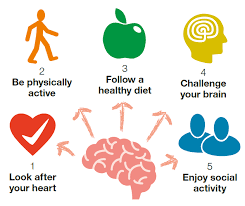
Almost 6 million Americans are living with Alzheimer’s, and that number is foreseen to reach 14 million by 2050. It’s a condition that affects about 10% of seniors international.
With that in mind, you may be questioning if you can prevent or delay Alzheimer’s and other forms of dementia, especially if you know someone who not yet has such conditions.
While some factors like age and genetics are beyond your control, research suggests that there are some things you can do to lower your risk.
Most of these lifestyle changes are also beneficial for your heart and your overall health, so they’re well worth the effort. Start now to maximize your chances of staying mentally and physically fit as you age.
1. Eat whole foods. While no special diet is necessary, you may want to try the Mediterranean or DASH diets that are often recommended for Alzheimer’s patients. In any case, get most of your calories from vegetables, fruits, lean proteins, and healthy fats.
2. Minimize empty calories. Cut down on white sugar and flour products that tend to trigger inflammation. Read labels and use healthy sweeteners like fruit and cinnamon.
3. Drink tea. While there are no magic foods, many studies show that drinking tea is associated with a lower risk of dementia, especially for those with a genetic predisposition. Start your day with a cup of hot or iced tea.
4. Limit alcohol. Alcohol can make the symptoms of dementia worse, and any heavy drinking can harm your brain. Seek professional help if you have trouble drinking responsibly on your own.
5. Lose weight. Being overweight or obese can double or triple your risk of Alzheimer’s. Limit your portions and choose foods high in fiber.
6. Work out regularly. A balanced exercise program can reduce your risk for Alzheimer’s by 45%, according to the Alzheimer’s Society. In addition to aerobics, train for strength and balance. Staying active throughout the day counts too, so take the stairs instead of the elevator.
.
1. Protect your head. Trauma to your head can lead to dementia. Wear your seatbelt and appropriate safety gear for any sports you play. Most falls occur at home, so fix any hazards like slippery area rugs or missing banisters on stairs.
2. Sleep well. Dementia can interfere with sleep and lack of sleep can contribute to dementia. Aim for 7 to 8 hours of slumber a night.
3. Quit smoking. Smoking may increase the risk of Alzheimer’s by almost 80%. It often takes multiple attempts to quit successfully, so keep trying.
4. Manage stress. Tension and anxiety take a toll on your brain and other organs. Learn to relax through deep breathing, meditation, and other practices.
5. Challenge your brain. On the other hand, mental stimulation keeps your brain nimble. Solve puzzles and continue to learn. Read books and study foreign languages. Pick up new skills and hobbies. Practice doing daily tasks with your non-dominant hand.
6. Stay connected. Spending time with family and friends helps too. Share meals and weekend getaways. Volunteer in your community or join a Meetup Group.
7. Talk with your doctor. Your doctor can help you figure out priorities for managing your own individual risk factors. Many conditions including high blood pressure, high cholesterol, and diabetes can also increase your risk for dementia, so share your concerns and ask questions.
More research is needed to understand the causes of Alzheimer’s, but there’s enough evidence to support prevention strategies like eating healthy and exercising regularly. Taking care of your brain and your heart may help you to slow down or even reverse any cognitive decline.
"Finding Peace, Peace of Mind" is recognized as one of Feedspot's top Alzheimer's blogs in 2025, offering invaluable insig...


